
NEWS: Excavation Reveals Severe Decay in Historic American Beech at Cafe Lawn
In January, NYC Parks began the process of removing an American Beech tree on Café Lawn after discovering an advanced infection of Kretzschmaria deusta, commonly known as Brittle Canker. This aggressive, incurable wood-rotting fungus weakens a tree’s base and root crown, significantly increasing the risk of sudden breakage and falling limbs.
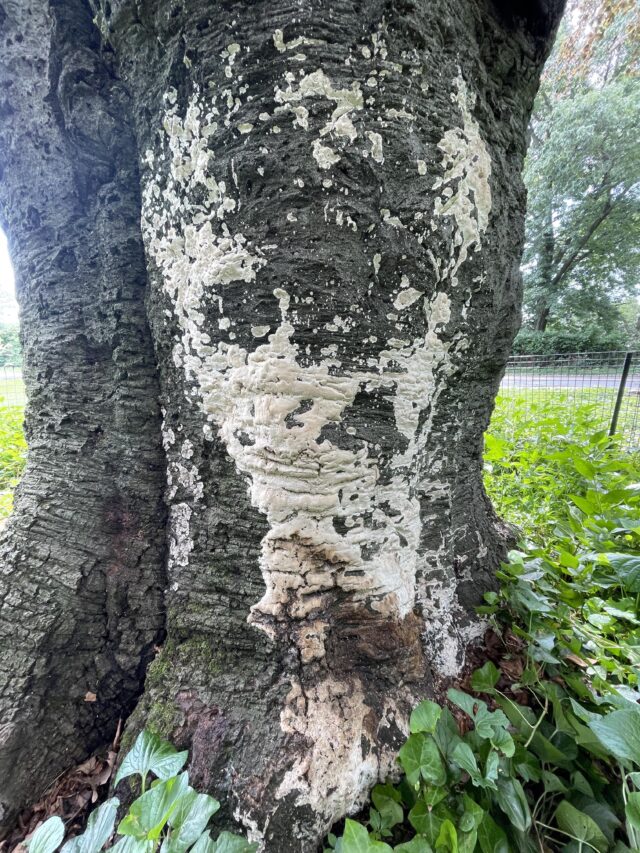
As excavation began, gardeners from the Fort Tryon Park Conservancy and the NYC Parks team uncovered just how severe the internal damage was. What appeared outwardly to be a stable, long-standing tree was, in reality, hollow and extremely unhealthy. The extent of the decay confirmed that the tree posed a serious danger to park visitors, joggers, and nearby traffic, including passing cars and buses.
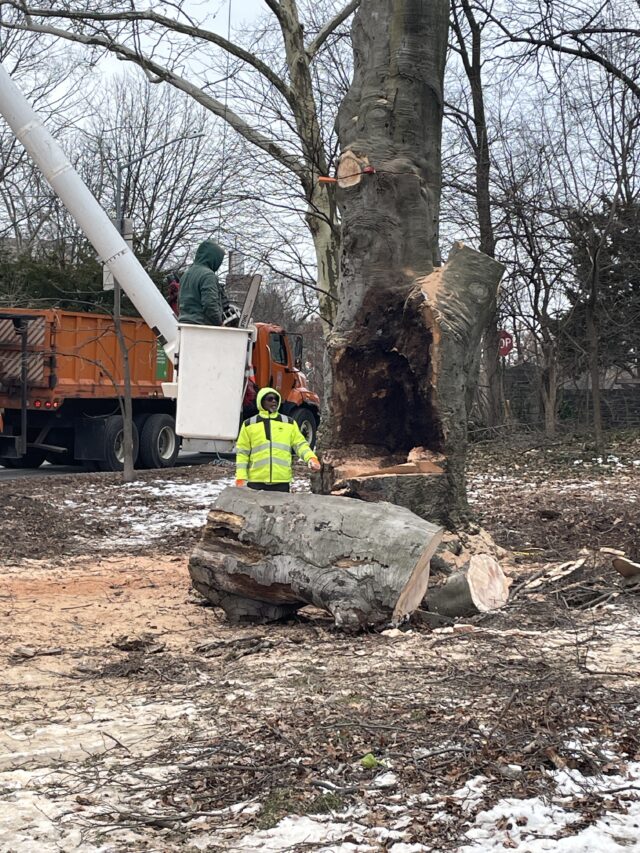
Because there are no effective treatments once Kretzschmaria deusta takes hold — and due to the tree’s size and level of structural compromise — removal was determined to be the only safe and responsible option to protect public safety.
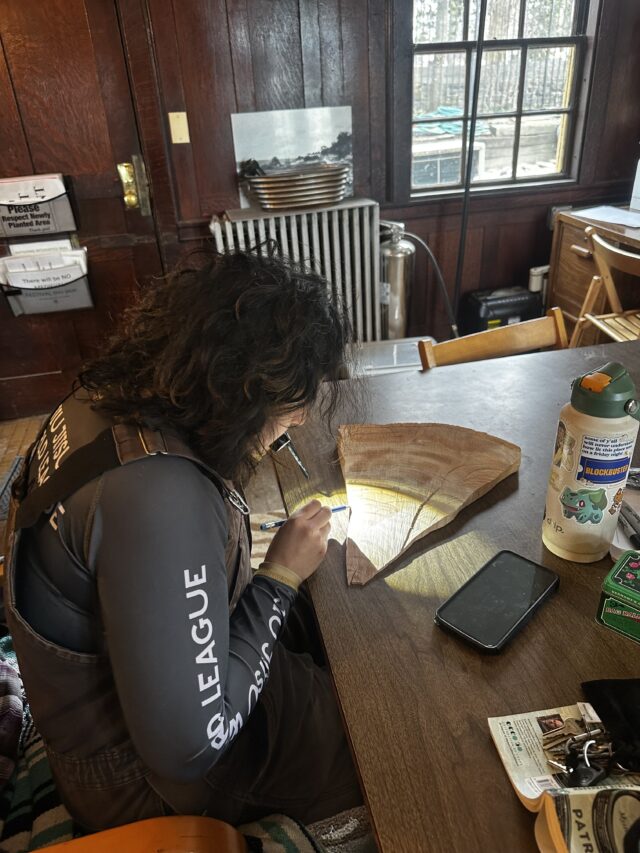
NYC Parks gardener Asher gauged the approximate age of the American Beech by studying its growth rings. It was estimated to be over 200 years old!
A Living Witness to Fort Tryon Park’s Past
The loss of the American Beech is made all the more poignant by its deep historical roots in the park. An extraordinary photograph from 1926 shows Libbey Castle with the very same American Beech visible just to the left of the structure, standing tall nearly a century ago. The tree bore witness to generations of change at Fort Tryon Park and remained a quiet presence through decades of transformation in Upper Manhattan.
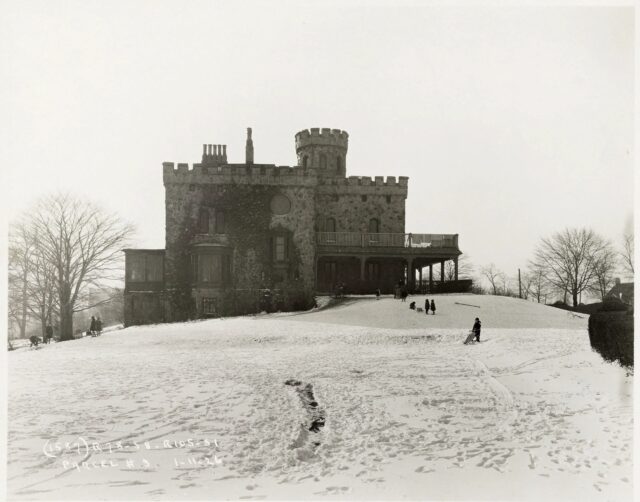
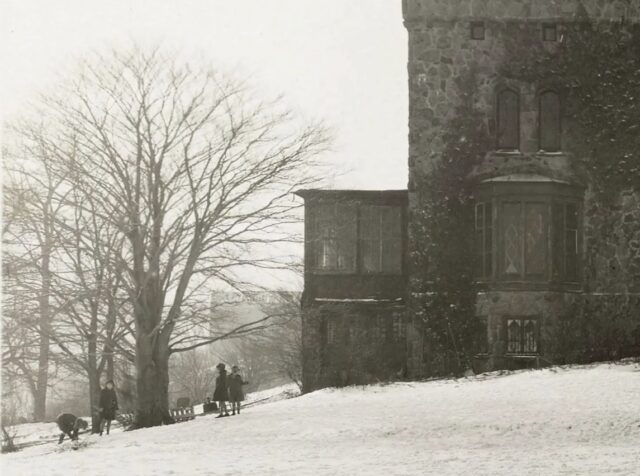
Libbey Castle itself has a rich and layered history. Originally built in the 1850s as “Castle Richards” by Augustus C. Richards, the home was designed by renowned architect Alexander Jackson Davis and constructed in Manhattan schist. Richards, a Boston-born businessman who later became a director of the Metropolitan Bank and the Home Fire Insurance Company, was also a member of the Union Defence Committee during the Civil War, helping raise funds for the Union Army.
After Richards sold the property, the castle passed through the hands of several notable owners, including William Libbey, Alexander T. Stewart, and the infamous Boss Tweed. Over time, the structure became known as Libbey Castle, a name that endures in the park’s landscape today.
Stewardship, Safety, and Gratitude
The removal of the American Beech reflects the difficult but necessary balance between preservation and public safety. While the loss of such a historic tree is deeply felt, protecting the wellbeing of park visitors must always come first.
The Fort Tryon Park Conservancy extends its sincere thanks to its partners at NYC Parks and to Conservancy gardener Craig for his care, expertise, and stewardship of the park. Craig worked diligently throughout the process to ensure public safety while maintaining the integrity of the landscape, and he also conducted this extensive historical research that uncovered valuable insights into Fort Tryon Park’s past.
Though the American Beech is gone, its story — and its place in the park’s long history — will not be forgotten. Its legacy remains woven into the landscape of Fort Tryon Park, a reminder of the living history that continues to shape this treasured public space.